The Tax Sub-Department of Region XVI has issued Official Letter 7629/CCTKV. XVI-QLDN  dated 14/5/2025 to provide guidance to enterprises on resolving certain issues related to invoice issuance in cases involving the sale of shopping vouchers.

According to current regulations, invoices for the sale of goods must be issued at the time ownership or usage rights are transferred, regardless of whether payment has been received. However, shopping vouchers are not considered goods or assets. Therefore, when an enterprise sells shopping vouchers to customers, it is only required to issue a receipt for the amount collected and is not required to issue a VAT invoice at the time of voucher sale. Instead, a VAT invoice is only issued when the customer uses the shopping voucher to exchange for goods, based on the time when the ownership or the right to use the goods is transferred to the customer.

On May 6, 2025, the Customs Department issued Official Letter No. 4072/CHQ-NVTHQ providing guidance for enteprises on the handling of value-added tax (VAT) for cases where imported goods are damaged due to fire or storms.

Accordingly, the Customs Department confirmed that imported goods are subject to import duty and VAT, unless specific exemptions are provided by law. For import duty, the applicable laws clearly provide that importers may be entitled to a reduction of import duty in cases where goods are damaged while under customs supervision, with the reduction proportionate to the actual loss incurred.

However, regarding VAT, the current legal instruments governing VAT do not provide any provisions for exemption or reduction in the event that goods are damaged or destroyed. Therefore, the Customs Department confirmed that enterprises have no legal grounds to seek a VAT exemption or reduction for imported goods that have suffered damage.

As part of efforts to implement the revised 2024 Law on Value-Added Tax, the Ministry of Finance is developing a Draft Decree (“Draft”) that aims to clarify and operationalize new VAT regulations. The Draft is expected to improve tax transparency, strengthen administrative oversight, and assist businesses in achieving compliance. Key proposals under the Draft include several significant adjustments.

One notable change is the proposed reduction in the threshold for non-cash payments required to qualify for input VAT deductions. Currently, a non-cash payment is required for purchases of VND 20 million or more. The Draft lowers this threshold to VND 5 million (including VAT), reflecting a stricter approach to discourage tax fraud and enhance traceability in transactions.

The Draft also introduces clearer definitions for goods and services not subject to VAT. For instance, preliminary processed agricultural products are now defined as items that have undergone basic processes such as milling, peeling, drying, canning, or preservation using inert gases or sulfur. This clarification aims to help taxpayers and authorities more clearly identify qualifying VAT-exempt agricultural goods. Additionally, the Draft proposes extending VAT exemption to include artificial products that replace human body parts, as well as imported goods classified as relics, antiques, and national treasures in accordance with legal provisions. These clarifications are expected to facilitate more consistent interpretation and application of VAT exemptions.

Regarding VAT for promotion, under current regulations, promotional goods and services provided free of charge have a taxable price of zero. However, ambiguity remains for cases involving price reductions during promotions. To address this, the Draft specifies that the VAT taxable price in such instances shall be the discounted price applied during the registered or notified promotional period under commercial law.

To support businesses involved in supplying goods and services taxed at the 5% VAT rate, the Draft introduces new provisions for VAT refunds. Enterprises exclusively conducting 5% VAT activities may claim a refund if accumulated uncredited input VAT reaches VND 300 million or more over a 12-month period. Businesses with mixed VAT activities (5% and other rates) may also qualify for refunds if they can account separately for input VAT related to their 5% VAT-rated activities, and the threshold of VND 300 million is met.

In general, the Draft aims to provide clearer guidance and more consistent enforcement of the new VAT Law. The proposed amendments balance the objectives of effective tax administration with the need to simplify procedures and support business operations. If adopted, these changes are expected to facilitate smoother implementation of the VAT law and reduce interpretive uncertainties for both taxpayers and tax authorities. 


On May 16, 2025, the Ministry of Health promulgated Circular No. 12/2025/TT-BYT (“Circular 12”), governing the registration for marketing authorization (MA) of pharmaceutical products and active pharmaceutical ingredients (APIs) in Vietnam. Circular 12 officially supersedes Circular No. 08/2022/TT-BYT, Circular No. 16/2023/TT-BYT, and Circular No. 55/2024/TT-BYT. 

Compared to the previous regulations, Circular 12 has simplified administrative procedures and provided greater clarity on specific regulatory requirements regarding registration dossiers and processes for MA. Key revisions introduced under Circular 12 are as follow:

Changes in documentation requirements and administrative procedures for MA registration

One key revision of Circular 12 compared to Circular No. 08/2022/TT-BYT, is the revised CPP requirement, as Circular 12 now allow submission of a single CPP from either the country of manufacture or an EMA/SRA country where the product is actually marketed, which enhances access to new drugs, vaccines and biologics. However, enterprise responsibilities are significantly reinforced. Specifically, the period for CPP authenticity verification is now extended to 03 years from the date of a regulatory sanction decision. Manufacturers and applicants bear full legal responsibility for the accuracy and legitimacy of their registration dossiers.

Regarding the MA renewal process, dossiers may now be submitted at any time prior to expiration date without a maximum time limit, enabling continuous market presence for strategic products. The new regulation also specifies that the product name may be changed during renewal. All other changes must be handled through corresponding variation dossiers. If a name change is approved upon MA renewal, this modification must be implemented no later than 12 months following approval.

Notably, to improve dossier quality, Circular 12 imposes stricter limits on dossier supplementation: a maximum of 02 rounds, each within 06 months, for initial registration, renewal, and variation. A third round is only permitted under exceptional circumstances, either at the request of evaluating experts (with Advisory Council approval) or from the Advisory Council itself. This emphasizes the need for careful preparation to ensure that the initial dossier is complete and consistent, with post-approval changes (if any) to be handled through appropriate variation or supplementation procedures.

Harmonization with international standards via reference assessment procedures and clinical data 

Circular 12 have provide new regulation on reference assessment procedures, applied to drugs granted MA by EMA/SRA authorities, provided the Assessment Report is submitted within 05 years of the initial approval date. The Drug Administration of Vietnam (DAV) will verify technical document consistency with the reference dossier, and independently assess administrative and technical documents that differ. Assessment Reports from the EMA/SRA must be the official, final version, accompanied by any relevant decisions (if applicable), and must detail the evaluation of product quality, safety, and efficacy, along with the legal basis and scientific rationale for approval. At a minimum, these reports must cover administrative contents, quality, safety and efficacy data, together with a comparative equivalence table following Form 09/TT.

Clinical dossier requirements under Circular 12 also differ significantly from earlier regulations. Circular 12 mandates clinical data demonstrating safety and efficacy, sets clear exemption criteria for clinical trials or specific trial phases, and specifies cases requiring Phase IV trials. Circular 12 also outlines detailed clinical documentation requirements for new chemical drugs, vaccines, biologics, new non-innovator drugs (including first generics and super generics), and traditional or herbal medicinal products.

Delineation in authority to grant MA and shorten approval timelines 

Circular 12 modifies the MA issue authority. Accordingly, the DAV will issue MAs following consultation with the Advisory Council for the following cases: newly authorized drugs within the 03 years; withdrawn products (voluntarily or by order); critical variations (e.g., ETC/OTC reclassification, changes to indications, dosage, administration route, and patient population); and the designation of innovator drugs, reference biological products, or submissions involving bioequivalence (BE) studies. Circular 12 then empowered the DAV to grant MAs directly, without Advisory Council consultation for products: that have held MA for 05 years; non-critical variation dossiers; and updates to the package insert to align with approved innovator drugs.

To ensure timely access to medicines and minimize MA approval delays, Circular 12 shortens dossier evaluation timelines: 12 months for new registrations; 9 months for new registrations via the reference pathway; 3 months for major variations and minor variations requiring prior approval; and just 20 working days for minor variations requiring notification only. For contract-manufactured (CM) or technology-transferred (TT) drugs, evaluation timelines are also encouraged to be shortened: no more than 3 months for drug products prior to contract manufacturing and drug products prior to technology transfer already granted an MA, and no more than 9 months for those without an existing MA. 

Circular 12 contains several entirely novel provisions implemented for the first time, necessitating additional guidance from the DAV to ensure uniform application across the pharmaceutical sector. For enterprises, the new regulations under Circular 12 promise to simplify both the dossier requirements for obtaining MA as well as reducing the processing time. Therefore, proactively understanding and adapting to these significant changes in Circular 12 will be a key factor in maintaining a competitive advantage in the market. Circular 12 will take effect from July 1, 2025. 

The cosmetics sector in Vietnam is currently governed primarily by Decree No. 93/2016/ND-CP, Circular No. 06/2011/TT-BYT, and related legal documents. However, over time, these regulations have revealed significant gaps with substandard cosmetic products continuing to circulate openly in the market, posing risks to consumer health and undermining fair competition.

In response to these issues, the Ministry of Health is developing the first draft of a new Decree on Cosmetics Management (“Draft”) which seeks to strengthen the regulatory framework. The Draft introduces a range of proposed changes to improve oversight, address existing shortcomings, and promote a more transparent and equitable business environment in the cosmetics industry. 

One of the major focuses of the Draft is the tightening of regulations on cosmetic advertising. To prevent misleading or deceptive cosmetic advertisements, the Draft proposes to prohibit the use of images, uniforms, or names of doctors, pharmacists, healthcare professionals, or medical facilities in cosmetic advertisements. Additionally, the use of certain terms such as “treatment,” “heals immediately,” “eradicates,” “cures,” “permanently cured,” “kills viruses,” “kills fungi,” “fat reduction,” “weight loss,” and similar phrases in cosmetic advertising will be banned. These proposal are aimed at preventing cosmetics from being mistaken for medicinal products and enhancing the clarity and reliability of advertising content. While these stricter rules may initially challenge businesses in revising their promotional strategies, they are expected to support a healthier competitive environment and protect consumer interests.

The Draft also proposes enhanced requirements for cosmetic manufacturing facilities. Specifically, the Draft requires each facility to appoint a full-time quality assurance officer with a university degree in a relevant field, specialized training in cosmetic quality management, and at least two years of relevant experience. In terms of infrastructure, the Draft sets out more detailed and specific standards for ventilation, lighting, water systems, and equipment used in the manufacturing process, aiming to raise safety and quality benchmarks across the industry.

Moreover, in contrast to the current regulations, which only require the appointment of a production supervisor with relevant expertise, the Draft goes further by requiring that all personnel directly involved in the production process must possess appropriate professional knowledge, experience, skills, and competence consistent with the scale of the facility. Furthermore, these personnel must be trained in manufacturing procedures in accordance with CGMP principles. 

Significant changes are also proposed to the cosmetic product notification process. Under the current framework, a receipt number must be issued within three working days from the date a valid dossier is submitted, and remains valid for five years. The Draft, however, proposes to extend this processing period to ten working days and reduce the validity of the receipt number from five years to three. According to the Ministry, this adjustment is consistent with international practice, where the validity period often ranges from one to three years.

Overall, the Draft introduces more specific and detailed regulations compared to the current framework, reflecting the Ministry of Health’s efforts to address existing shortcomings and elevate the regulatory standards for the cosmetics sector. If adopted, the new regulations will likely extend the time required for cosmetic notification procedures and place greater restrictions on advertising activities. However, in the long run, the Draft is expected to help establish a more transparent, equitable, and stable business environment.

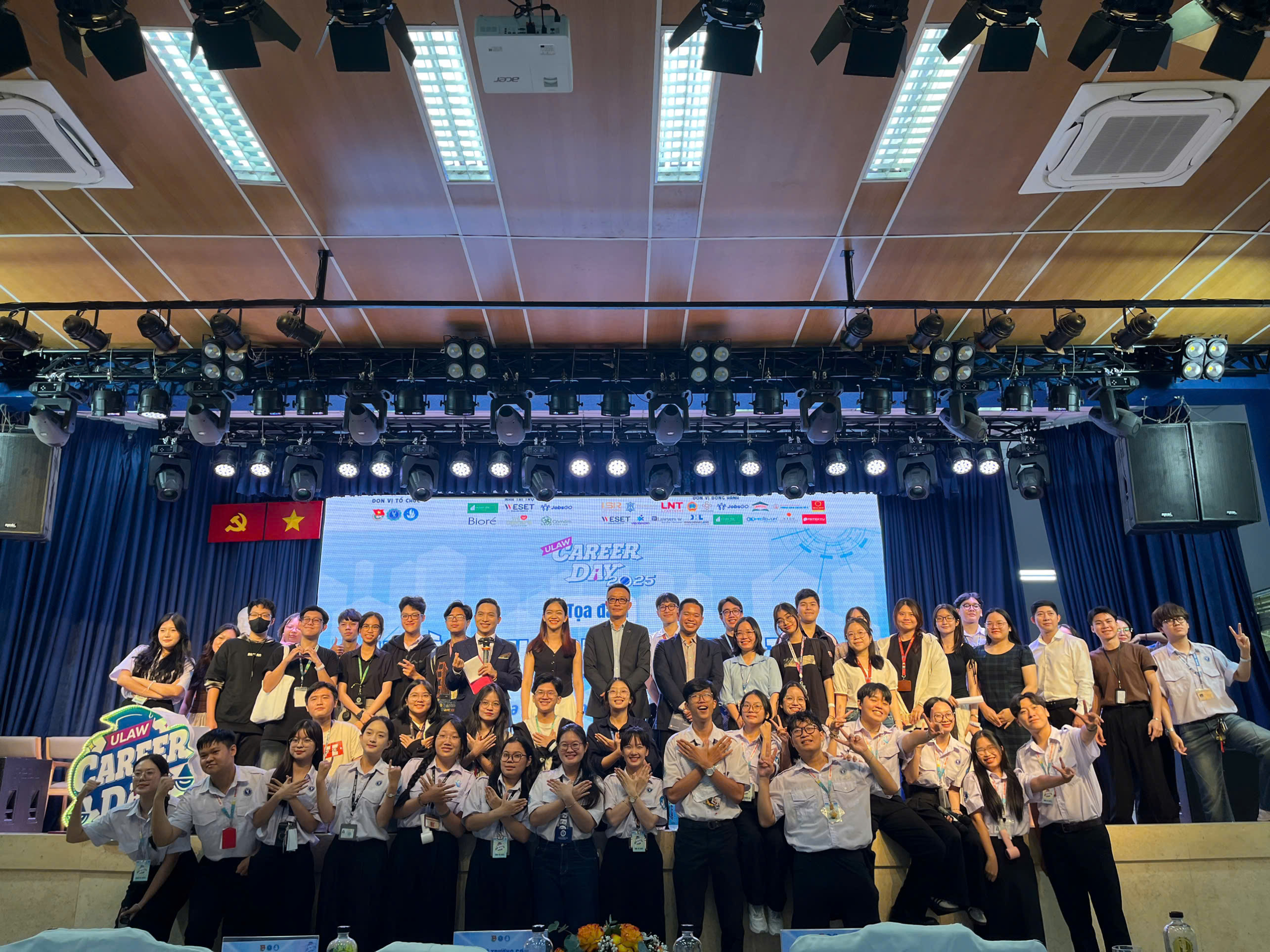
Ho Chi Minh City, June 7, 2025 – ALIAT GROUP actively participated in Ulaw Career Day 2025, an annual event organized by the Ho Chi Minh City University of Law at its main campus on Nguyen Tat Thanh Street, District 4. This event serves as a vital platform connecting students with leading businesses in the legal and economic sectors, attracting widespread interest from students, faculty, and industry professionals. As part of the program, Lawyer Nguyen Quoc Phong – Founding Partner and Deputy CEO of ALIAT GROUP – was invited as a speaker for the thematic panel discussion “AI & Practical Experience.” His presentation, titled “Exploring How Artificial Intelligence is Reshaping Recruitment,” offered insightful perspectives on the impact of technology on the job market. His practical advice and forward-looking views equipped students with valuable knowledge and greater confidence in navigating the evolving recruitment landscape. 

Following the event, ALIAT GROUP’s executive team held a working session with the leadership of Ho Chi Minh City University of Law to foster closer institutional collaboration. Representing the university were Assoc. Prof. Dr. Tran Viet Dung, Vice Rector, and Mr. Nguyen Thanh Ba Dai, Secretary of the Youth Union and Deputy Head of Communications and Corporate Relations. On ALIAT GROUP’s side, the meeting was attended by Mr. Duong Thanh Long – CEO, Mr. Nguyen Quoc Phong – Deputy CEO, and Ms. Le Thi Thu Giang – Director of Administration and Human Resources.

During the meeting, both parties discussed their strengths, development orientations, and shared goals in training, research, and the development of legal human resources. With an open, forward-thinking spirit, ALIAT GROUP and the University agreed to jointly develop practical, in-depth, and impactful collaboration programs that can deliver real value to students and the broader legal community. In the near future, the two parties plan to work together on a detailed and concrete plan to effectively implement the discussed initiatives, further enhancing the connection between legal education and professional practice.