PV Gas reduces LPG deliveries amid Middle East conflict disruptions

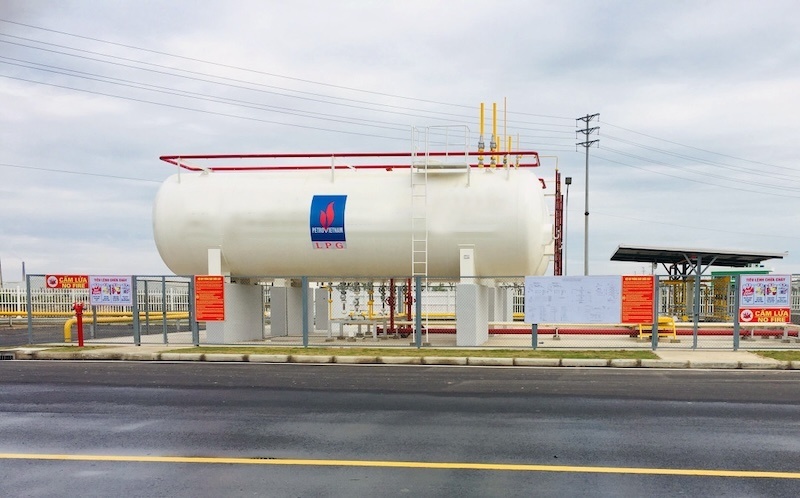
LPG storage tanks supplying customers

On March 2, PVGas Trading – the trading arm of Vietnam Gas Corporation (PV Gas) issued an urgent force majeure notice to its customers in southern Vietnam, citing two primary causes behind the disruption.

The first stems from an official force majeure declaration by the company’s international supplier following the collapse of a loading bridge at the NGL Juaymah facility on February 23. The incident has disrupted contracted shipments of propane and butane.

As a result, all LPG cargoes scheduled to arrive at the Thi Vai and Diem Dien refrigerated terminals from March 10 have been postponed.

The second factor relates to escalating armed conflict in the Middle East, which has affected the transit of refrigerated LPG vessels through the Strait of Hormuz. As of 3 p.m. on March 2, 2026, at least two very large crude carriers had reportedly been struck by missiles while passing through the strategic waterway. In addition, several NGL/LPG production facilities operated by suppliers in the region have come under attack and sustained significant damage.

For safety reasons, all very large gas carriers transporting refrigerated LPG from the Middle East under delivery commitments scheduled from the second half of March through the end of April 2026 currently have no confirmed delivery plans to PV Gas Trading.

Given these force majeure circumstances, PV Gas Trading said it would adjust its imported LPG delivery schedule through March 10, 2026, and is currently unable to arrange imported supply for customers beyond that date.

The company stressed that the situation was beyond its control.

PV Gas Trading is working with partners to secure alternative supply sources at the earliest possible time. However, it is facing significant challenges as the broader East Asian market is experiencing tight supply conditions. Some countries, including Thailand, have reportedly activated emergency measures, including temporary bans on fuel exports.

In the interim, the company has urged customers to adjust their consumption plans or seek alternative supply sources while awaiting feasible solutions.

Honda Vietnam marks 30-year milestone

Speaking at the ceremony, Sayaka Arai, general director of Honda Vietnam, expressed her appreciation of government authorities, partners, customers, and employees who have supported the company’s journey over the past three decades.

“Today marks a meaningful milestone, and I would like to express our sincere gratitude to the government of Vietnam, local authorities, our valued dealers, suppliers, media agencies, customers, and associates who have accompanied us throughout three decades,” Arai said. “Your trust and support have been the driving force behind our growth.”

Established in 1996, Honda Vietnam has invested approximately $627 million in the Vietnamese market. Over the past three decades, the company has grown into a comprehensive mobility provider with more than 10,000 employees, while creating jobs across its supporting industries, nationwide dealer network, and supply chain.

According to Arai, Honda Vietnam has steadily strengthened its production capacity, expanded its nationwide distribution network, and increased exports to international markets, contributing to the development of Vietnam’s automotive and motorcycle industries as well as the broader economy.

Honda Vietnam has delivered more than 40 million motorcycles to customers across the country over the past 30 years, making it one of the most trusted mobility brands in Vietnam. The company currently operates three motorcycle manufacturing plants with a combined annual production capacity of 2.75 million units, with localisation rates exceeding 96 per cent.

Honda’s motorcycle portfolio in Vietnam has expanded to cover a wide range of segments, from cub and scooter models to manual transmission motorcycles and EVs. The company has also introduced advanced technologies such as anti-lock braking systems, smart keys, the fuel-efficient eSP+ four-valve engine, and Honda RoadSync connectivity to enhance safety and convenience.

As part of its green mobility strategy, Honda Vietnam has introduced several electric motorcycle models. From 2026, Honda motorcycles sold in Vietnam are expected to comply with Euro 4 emission standards, supporting the transition to environmentally friendly mobility.

Honda Vietnam marks 30-year milestone

To mark the company’s 30th anniversary, Honda Vietnam also launched a special edition of the Air Blade 125 in collaboration with MARVEL. Inspired by the iconic characters Spider-Man and Venom, the limited edition—restricted to 4,000 units nationwide—combines distinctive design elements with the model’s well-known performance.

In addition to its motorcycle business, Honda Vietnam has steadily expanded its presence in the car market since entering the segment in 2006. The company’s car factory in Vietnam currently operates with a production capacity of 35,000 units per year.

Key models such as the CR-V and City are assembled locally, delivering Honda’s core values of sporty design, fuel-efficient performance, advanced technologies, and high safety standards.

In line with Honda Motor’s global electrification strategy, Honda Vietnam has expanded its hybrid vehicle lineup. Notably, the CR-V e:HEV became the first hybrid vehicle assembled in Vietnam in 2026, marking a significant milestone in the company’s sustainable mobility journey.

Advanced technologies such as the Honda Sensing driver-assistance system, the Honda Hybrid system, and Honda Connect digital services have also been integrated into Honda vehicles to enhance safety, connectivity, and convenience for drivers.

Looking ahead, Honda Vietnam aims to strengthen its core products by improving quality, efficiency, and environmental performance across its technologies, while advancing electrification through electric motorcycles and hybrid vehicles.

“Guided by this balanced and responsible approach and strengthened by our close partnership with the government and relevant stakeholders, we will contribute to Vietnam’s sustainable development goals while delivering reliable mobility solutions aligned with the country’s development pathway and market conditions,” Arai said

Beyond its business operations, Honda Vietnam continues to promote social initiatives, particularly in road safety education and environmental protection.

Each year, the company collaborates with government authorities and partners to provide traffic safety training to more than 27 million people across different age groups. Since 2018, Honda Vietnam has also worked with authorities to donate helmets and provide safety training for all first-grade students nationwide, with more than 12 million helmets distributed so far.

In 2025, the company cooperated with the Traffic Police Division to pilot moped training programmes for more than 8,700 high school students and nearly 2,000 traffic police officers. These instructors are expected to expand the programme to more than 3.1 million students nationwide.

As part of its 30th anniversary initiatives, Honda Vietnam also donated 408 ICON e: electric motorcycles to high schools across the country to support standardised training vehicles for traffic safety education.

Looking forward, Honda Vietnam said it would continue placing customers at the centre of its strategy while contributing to Vietnam’s sustainable development.

“We aspire to create lasting value for our customers and for Vietnam,” Arai said, adding that the company hopes to continue receiving support and cooperation from partners and stakeholders in the years ahead.

Xavier Depouilly, general manager DXL Research & Consulting

The key question shall no longer be how fast Vietnam can grow, but how well that growth can be sustained and shared across businesses, sectors, and the population.

Business sentiment provides an early indication of economic direction. The Business Confidence Index (BCI), conducted by DXL Research for the European Chamber of Commerce in Vietnam, reached 80 points in Q4/2025, returning to pre-pandemic levels.

Around 65 per cent of companies described their current business situation as “good” or “very good”, while 69 per cent expressed a positive outlook for the first quarter of 2026.

Confidence is especially strong among larger companies. Firms with more than 500 employees report even higher optimism, which is significant as these businesses typically invest with a long-term horizon. Their activity supports local suppliers, service providers, and employment, helping strengthen the broader domestic market, including small and medium-sized enterprises.

Meanwhile, tourism was a major contributor to Vietnam’s economic momentum in 2025. Official figures show that more than 21 million international visitors arrived last year, the highest number ever recorded. This recovery supported growth across multiple sectors, including retail, transport, hospitality, and entertainment.

Beyond the main urban centres, tourism has also driven growth in central Vietnam, particularly in Danang and nearby provinces. At the same time, rising incomes are encouraging Vietnamese households to spend more on travel, leisure, and services. This shift towards experience-based consumption is expected to continue in 2026, helping balance the economy and support local businesses.

For many companies, the focus has clearly moved beyond recovery from the pandemic era. BCI survey results show that half of businesses now prioritise business development and diversification, rather than cost reduction. This signals a healthier phase of growth, as firms actively seek new customers, products, and opportunities within Vietnam and in the region.

As we look towards 2026, the roadmap is clear. The World Bank projects growth to moderate slightly to a sustainable 6.3 per cent before accelerating again in 2027, allowing the economy to digest recent gains and focus on efficiency. This growth rate remains strong by international standards and reflects a more stable and sustainable pace.

Elsewhere, technology adoption is becoming increasingly visible across the economy. Around 40 per cent of businesses plan to expand their use of digital tools, automation, or AI. This trend is not limited to large corporations. DXL’s latest consumer research, conducted in December among 900 respondents across four major cities, shows that nearly one in five urban residents already use AI-based tools regularly, mainly for work productivity and information search.

Over time, higher productivity supports wage growth and more sophisticated consumer demand. This creates opportunities not only for technology firms, but also for retailers, service providers, and local brands that can adapt to digital expectations.

Despite these positive signs, 2026 will not be without risks. Vietnam remains exposed to global shocks, including changes in trade patterns and geopolitical tensions. Climate-related risks and supply chain disruptions also remain relevant, as experienced in recent years.

At the same time, internal reforms and administrative adjustments continue to reshape the business environment. These changes are necessary, but they require companies to stay informed and adaptable. Ensuring that growth benefits small businesses, workers, and households will be an important part of building sustainable, inclusive growth.

Vietnam’s outlook for 2026 is encouraging. The foundations for growth are strong, supported by confident businesses, recovering tourism, and evolving domestic demand. The next phase will depend on adaptability, inclusion, and the capacity to manage new external shocks.

For investors and companies, the opportunity is no longer only about producing and exporting from Vietnam, but about growing together with a domestic market that is becoming more digital, more sophisticated, and more demanding.

P5 bài Economy – xuất khẩu hàng hóa ở cảng
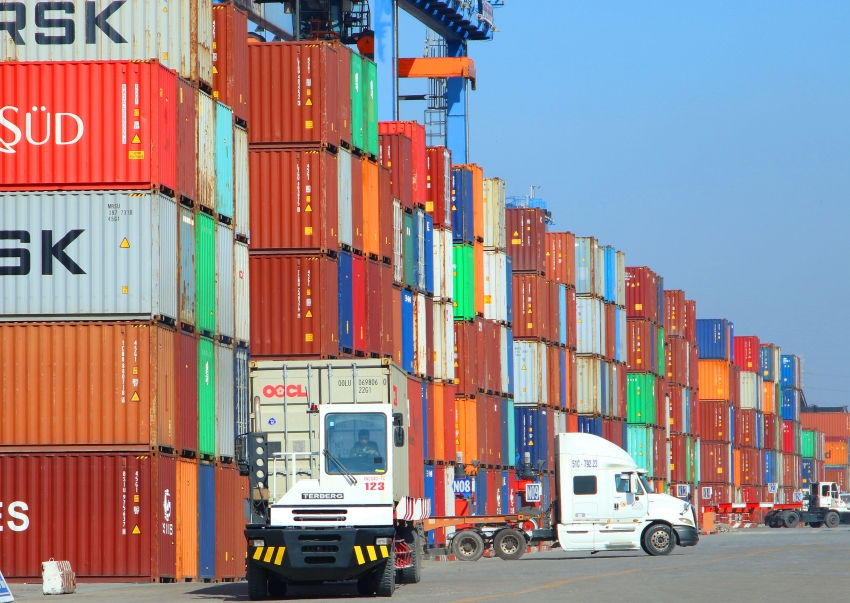
Authorities issued a cautionary notice to help export-import and logistics businesses stay prepared amid evolving global developments. Photo: Le Toan

Official Dispatch No. 229/XNK-TLH, dated March 1, 2026, states that on February 28 marked a serious escalation of tensions in the Middle East and created “serious instability” and posed high risks to transportation activities, international trade and global supply chains.

The agency warned that prices of consumer goods, fuel, and global oil are forecast to rise, generating “indirect and multi-dimensional negative impacts” on Vietnam’s production and export-import activities, as well as on trade with the Middle East.

For logistics services, rising fuel costs are expected to push up sea freight and air cargo rates, particularly on routes connecting Vietnam with countries in the region.

According to the dispatch, several Middle Eastern countries have restricted or closed their airspace due to security concerns, forcing passenger and cargo flights to reroute, prolonging flight times and increasing logistics costs.

Maritime transport has also been significantly affected, as shipping through the Strait of Hormuz has nearly stalled following airstrikes. Iran has warned that passage through the strait is currently unsafe, compelling shipping lines to avoid the area or alter routes, thereby extending transit times and raising fuel expenses.

“Before the above situation, the Agency of Foreign Trade requests export-import industry associations and logistics associations to closely monitor developments,” it said.

Associations are asked to regularly coordinate with relevant state management authorities to provide updates to member enterprises, enabling them to adjust production plans, export-import arrangements, and transport operations.

The agency emphasised the need to “avoid disruptions and minimise negative impacts” from the conflict, while improving flexibility and resilience against fluctuations in the international business environment.

In addition, associations and enterprises are urged to “regularly and proactively analyse and coordinate information” with ministries and relevant agencies regarding trade data, domestic policy changes affecting business operations, cargo flows, freight rates, and surcharges, to prepare appropriate response scenarios for similar situations in the future.

They are also advised to develop preventive and adaptive plans to mitigate risks, losses, and disruptions in international trade and transport activities, and to prepare timely response measures to limit impacts on supply chains.

The dispatch further encourages frequent engagement with relevant MoIT units, including trade promotion and overseas trade offices, to identify new orders and potential markets, thereby formulating alternative or prioritised exploitation plans to “maximise opportunities”.

The agency said that close coordination among associations, enterprises, and authorities would be essential to strengthening resilience and safeguarding Vietnam’s export-import activities amid growing geopolitical uncertainty.

Vietnam making the leap into AI and semiconductors
Csaba Bundik, CEO, CETA Consulting

Crucially, Vietnam’s approach does not seek to compete directly with established global technology leaders in frontier research or advanced chip design. Instead, policymakers and investors recognise that the country’s comparative advantage lies in selective positioning within the AI and semiconductor value chains. In these segments, operational execution, manufacturing discipline, and scalability tend to matter more than being at the technological frontier.

This positioning builds on Vietnam’s existing strengths. The country already benefits from a well-established industrial base in electronics manufacturing and high-tech foreign funding. Global firms have developed large-scale production platforms in Vietnam, creating a dense ecosystem of suppliers, skilled labour, and logistics infrastructure. These capabilities provide a practical foundation for semiconductor-related activities such as assembly, testing, packaging, and advanced electronics manufacturing.

Human capital further reinforces this foundation. Vietnam has steadily expanded its pool of engineers and technology graduates, enabling the development of applied AI solutions, industrial automation, and embedded systems. These technologies are closely aligned with the needs of the real economy, delivering productivity gains across manufacturing, logistics, healthcare, energy management, and public services.

However, the limited availability of senior developers and systems architects with experience in complex, state-of-the-art solutions at scale remains a constraint that will need to be addressed to sustain momentum.

Investor interest is also shaped by Vietnam’s wider external positioning. Political stability, deep integration within ASEAN, and an extensive network of free trade agreements reduce geopolitical and trade-related risks at a time of global supply chain reconfiguration. Reinforced by Vietnam’s “bamboo diplomacy”, these factors support its role as a reliable and politically neutral base for technology manufacturing and deployment. For European backers in particular, this risk profile increasingly supports long-term engagement rather than purely cost-driven decisions.

Such long-term commitments place a premium on policy stability. For deep-tech and semiconductor projects, regulatory predictability consistently outweighs short-term fiscal incentives. Large-scale AI infrastructure and semiconductor investments involve high capital intensity and extended payback periods, making them especially sensitive to regulatory risk.

Vietnam can reinforce confidence by establishing clear and transparent pathways for nationally important technology projects, including streamlined licensing, predictable land-use arrangements, and more effective coordination between central and local authorities.

Within this policy environment, targeted incentives tend to deliver stronger results than broad-based support schemes. Priority areas include semiconductor packaging, testing, and supporting industries; AI computing infrastructure and data centres; and industrial and applied AI solutions aligned with Vietnam’s manufacturing and services base. These segments offer the greatest potential for scale, technology spillovers, and productivity gains while remaining consistent with existing capabilities.

As investment scales up, infrastructure constraints become more visible. Energy reliability has emerged as a decisive factor in technology funding decisions. AI infrastructure and data centres are highly energy-intensive and sensitive to power disruptions, making grid stability, energy availability, and renewable integration strategic enablers of Vietnam’s technology ambitions. Investors increasingly view energy policy as an integral component of the AI and semiconductor funding environment, rather than a separate consideration.

Regulatory credibility also extends beyond energy and investment licensing. Closer alignment with international standards on intellectual property protection, data governance, and AI ethics would further strengthen Vietnam’s standing with global technology corporations. European companies, in particular, operate under strict compliance frameworks and require confidence that intellectual property rights and data security will be enforced in practice. Strengthening implementation capacity, rather than relying solely on formal legal provisions, remains a key priority.

Financing represents another structural constraint. AI infrastructure, data centres, and semiconductor-related projects typically require substantial upfront investment and long payback periods that cannot be fully met through traditional bank lending alone. Vietnam has scope to combine state leadership, market mechanisms, and international capital into a balanced model suited to deep-tech development.

A practical financing framework could include long-term institutional capital and project finance for AI infrastructure and data centres; growth equity and venture capital to scale AI-enabled industrial technologies; and public–private co-funding mechanisms to reduce early-stage risk and crowd in private capital. Targeted tax incentives for technology companies, venture capital funds, and angel investors can further support ecosystem development. The central objective is to mobilise patient capital that supports long-term capability building rather than short-term returns.

Experience from Europe highlights the importance of ecosystem design. Successful innovation systems connect research, scale-up, manufacturing, and market access rather than treating them as isolated stages. Mission-driven innovation drives help align public funding with clear national and industrial priorities, ensuring that technological development addresses concrete economic needs.

Vietnam can accelerate the development of its AI and semiconductor ecosystem by strengthening university–industry collaboration, promoting cross-border research and development partnerships that facilitate knowledge transfer, and developing technology clusters linked to existing manufacturing and logistics strengths. Encouraging technology owners to establish regional or Asian headquarters in Vietnam would further enhance technology diffusion and managerial spillovers.

International cooperation should extend beyond technology transfer to include human capital development, institutional learning, and long-term competitiveness. Fast-track immigration and work permit procedures for highly skilled technology professionals and venture capital experts, alongside stronger enforcement of intellectual property protection, would help sustain confidence.