At VIR’s digital economy development conference held on November 25, policymakers, businesses, and experts discussed the solutions to unlock AI and 5G prospects to support the country’s digital economy development.

The event heard that 5G is bringing a clear competitive advantage to pioneering countries such as India and Malaysia, and expect this to happen to Vietnam as the government encourages network operators to speed up 5G deployment.

Seck Yee Chung, vice president of the Singapore Chamber of Commerce in Vietnam said 5G and AI together presents an extraordinary, time-sensitive opportunity for the region to leapfrog into a future shaped by intelligent connectivity, digital sovereignty, and inclusive growth.

“When integrated with AI, 5G becomes the infrastructure of innovation, enabling smart factories, precision agriculture, immersive education, AI-powered healthcare, and climate-resilient infrastructure,” Chung said.

5G is providing a competitive edge to countries like India and Malaysia, with governments creating the enablers. India has rolled out the fastest 5G networks, achieving 90 per cent 5G coverage in just 21 months. Today, India has 394 million 5G subscriptions and the highest data consumption globally, at 36 GB per month per active smartphone user. Government recognition of the need for digital infrastructure, effective spectrum allocation and management, and strong support for simplified deployment rules has enabled India to carry this out.

In Malaysia, the DNB network has become a global showcase for 5G. Based on the government’s commitment to leverage 5G to drive Malaysia’s leadership in the region, the country is enjoying more than 80 per cent coverage, one year ahead of schedule. As in the case of India, full 5G coverage is expected to create a GDP uplift of up to RM150 billion ($36.3 billion) by 2030 in Malaysia.

In Vietnam, since the first commercial 5G network was launched in October 2024, all major operators have provided the service, aiming to cover almost the entire population in the coming years.

Nguyen Phong Nha, deputy general director of the Authority of Telecommunications under the Ministry of Science and Technology, said that Vietnam’s telecommunications network currently has advanced technology equivalent to that of developed countries. Currently, the 5G network is widely covered and the fiber optic cable system reaches every village.

“Network operators are ready to cooperate with enterprises to deploy telecommunications application services on 5G networks through virtual network models. This is an opportunity for technology enterprises, and startups to deploy applications for all industries such as smart seaports, smart transportation, and online public services,” Nha said.

Hoang Van Ngoc, director of Strategy at Viettel, said that there are four major trends: AI use, the cloud, data mining and analysis, and innovation on digital platforms and data ecosystems. Ngoc noted that the government’s target is 30 per cent of GDP contribution from the digital economy, while the digital economic growth rate in Vietnam is already among the highest in the region, about 25-30 per cent per year.

“We have a dynamic and open government that promotes institutional change and a desire for transformation,” Ngoc said. “We have a large digital subscriber base and modern telecommunications infrastructure, and we have a high-quality workforce in the IT sector compared to the regional average.”

More importantly, Vietnam has transformed itself from a consumer of digital products to a producer of digital products, and can move towards exporting because of the advantages, Ngoc added.

However, Dong Manh Cuong, head of the Business School at British University Vietnam, said that as new technology platforms develop rapidly, the shortage of hybrid human resources becomes more evident. They must be able to operate blockchain-based financial models, optimise supply chains based on real-time data from 5G, or develop new fintech services.

“Vietnam’s biggest challenge today is not a lack of personnel, but a lack of the right people at the intersection of business and technology – people who are capable of turning technology into productivity, efficiency, and real economic value for businesses and the digital economy,” Cuong explained.


Airlines race to patch Airbus A320/A321 fleets

In an announcement on November 28, the European aircraft manufacturer said the updates affect a significant portion of the A320 family fleet, prompting airlines to review operations and prepare for possible short-term changes to flight schedules as the checks and modifications are carried out.

According to a preliminary assessment, analysis of in-service aircraft indicates that a significant number of A320 family jets could be affected and may require immediate precautionary action.

An emergency airworthiness directive issued by the European Union Aviation Safety Agency requires affected airlines to implement the modification before their next flight, effective from 23:59 UTC on November 29.

Airlines race to patch Airbus A320/A321 fleets

Based on this foundation, Airbus has released a notice to operators, requesting immediate precautionary action through the available software and/or hardware updates.

The incident is expected to lead to operational disruptions for passengers globally at the weekend. In Vietnam, 63 planes of Vietnam Airlines and 65 planes of Vietjet are thought to be affected.

Airlines race to patch Airbus A320/A321 fleets
Airbus and FPT deepen digital partnership Airbus and FPT deepen digital partnership

Airbus signed a new supplier agreement with leading Vietnam-based technology and IT services provider FPT on June 11 to strengthen their long-standing collaboration.

Vietjet places new order for 100 A321neo aircraft Vietjet places new order for 100 A321neo aircraft

Vietjet and aircraft manufacturer Airbus on June 17 announced a major new order for 100 A321neo aircraft, with the potential to add another 50 in the future.

Vietjet orders 100 Airbus A321neo aircraft Vietjet orders 100 Airbus A321neo aircraft

Vietjet has made a significant order for 100 Airbus A321neo aircraft, marking a new milestone in UK-Vietnam ties.

Efficient receipt checking and proper tax optimization are crucial when selecting a payment method on platforms like Lopebet. Ensuring your transactions are accurately documented not only helps with financial tracking but also supports compliance with tax regulations. Understanding how to verify your payment receipts and leverage tax benefits can significantly improve your financial management when using Lopebet’s services.

Tax optimization involves more than just filing returns; it requires thorough verification of receipts and payments made. When using Lopebet, careful tracking of your payment methods and transaction records is essential for accurate reporting and potential deductions. Receipt verification acts as a safeguard against discrepancies, preventing errors that might trigger audits or financial penalties.

Practical approaches to checking receipts on Lopebet include cross-referencing transaction details with bank statements and using digital tools designed to flag inconsistencies. Additionally, staying informed about relevant tax legislation can enhance your ability to optimize payments. For comprehensive guidelines on financial regulation and tax compliance, refer to the official government resource at https://lopebet-ind.com/. Also, recent updates on tax policy and compliance strategies are covered extensively by Reuters Finance Tax News, providing valuable insights for users aiming to maximize their advantages while adhering to legal standards.

On November 25, at the Digital Transformation 2025 conference organised by VIR, leading Vietnamese technology and telecommunications enterprises together with international organisations demonstrated that Vietnam’s digital economy has expanded at a remarkable speed, as AI and 5G open a new chapter for the country’s digital future.

Nguyen Phong Nha, deputy general director of the Authority of Telecommunications under the Ministry of Science and Technology, said that Vietnam now possesses an advanced telecommunications infrastructure that fully meets the needs of the digital economy, with technologies on par with developed nations.

“The rapid expansion of 5G and fibre-optic networks reflects the strong efforts of Vietnam’s telecom operators. Cloud computing technologies are also ready to support national infrastructure, forming a modern, resilient, and well-covered telecommunications backbone,” he added. “This proves that Vietnam’s infrastructure can fully meet the needs of businesses and economic sectors, and is prepared for foreign investors seeking to enter the Vietnamese market.”

New policy momentum powers Vietnam’s digital economy
Nguyen Phong Nha, deputy general director of the Authority of Telecommunications under the Ministry of Science and Technology

To further accelerate national digital economic development, four new strategic resolutions, including Resolutions 57-NQ/TW, 59-NQ/TW, 66-NQ/TW, and 68-NQ/TW, have been adopted. This four-pillar framework focuses on science and technology, international integration, legal reform, and private-sector development, creating new room for enterprises and markets to grow.

Assessing this policy momentum, Nha noted that the resolutions have been translated into sector-specific actions, with the Ministry of Science and Technology (MST) playing a crucial role in promoting innovation.

“From a policy perspective, institutional improvements and legal reforms have advanced rapidly. New policies are being put into practice within a short timeframe, enhancing transparency and facilitating trustworthy, efficient digital-based economic activities,” he said.

Beyond policy support, Nha highlighted how telecom enterprises have acted swiftly to enhance infrastructure resilience. For example, networks in storm-affected areas were restored within just 48-72 hours.

“Foreign high-tech firms investing in Vietnam’s telecom infrastructure are also committed to providing safe, disaster-resilient equipment, while small- and medium-sized enterprises and startups are building applications on digital platforms,” he emphasised.

From a European perspective, Yves Vanderstraeten, vice-chairman of the Digital Sector Committee at EuroCham, stressed that Vietnam is advancing rapidly, with strong momentum in its digital economy and online trade. He noted that the Vietnamese government has shown clear commitment to digital transformation.

“The UN e-government index shows Vietnam rising 15 places, from 86 to 71, which is the proof of strong commitment and tangible progress achieved in a relatively short time,” he said.

“EuroCham’s quarterly surveys show that European investor confidence in Vietnam is significantly higher than two years ago. We remain very optimistic about future investment opportunities,” he added.

From an enterprise standpoint, Hoang Van Ngoc, chief of the strategy division at Viettel, identified four major trends currently shaping the landscape of Vietnam’s digital economy.

“First is the AI-isation of everything, which is driving the digital economy. Second is the rise of data: data extraction, analysis, utilisation, and building ecosystems around data. Third is the shift to cloud computing. And fourth is innovation across digital platforms and data-driven ecosystems,” Ngoc stated.

New policy momentum powers Vietnam’s digital economy
Hoang Van Ngoc, chief of the strategy division at Viettel

Reflecting on Vietnam’s position in the global digital era, the Viettel representative described Vietnam as one of the fastest-growing digital transformation nations. The government aims for the digital economy to contribute 30 per cent of GDP, and Vietnam’s annual digital-economy growth rate of 25-30 per cent is among the highest in the region.

“Vietnam enjoys several advantages: a dynamic and open government committed to institutional reform; a large and expanding base of digital subscribers; and one of the most advanced telecommunications infrastructures in the world. Viettel alone will operate 28,000 5G stations by the end of 2025, with 90 per cent population coverage,” the representative noted.

“Vietnam also has strong IT talent, and importantly, we have transitioned from being digital-product consumers to digital-product creators, with the potential to export these solutions,” Ngoc added.

Sharing the perspective of another major telecom-digital enterprise, Le Xuan Son, deputy general director of VNPT-IT, emphasised the central role of human capital in executing the digital-economy agenda.

“Vietnam can now be fully confident about its infrastructure. Issues such as submarine cable incidents have greatly diminished, and cybersecurity remains secure. The newly issued resolutions act as a powerful catalyst: Resolution 57 serves as the locomotive guiding technological direction, Resolution 66 provides the institutional railway tracks, Resolution 69 supports international integration, and Resolution 68 empowers private-sector dynamism. Together, they form a machine driving digital economic development,” he said.

New policy momentum powers Vietnam’s digital economy
Le Xuan Son, deputy general director of VNPT-IT

However, Son also acknowledged existing limitations that must be addressed. For instance, Vietnam’s sandbox mechanisms remain underdeveloped, and while “Made in Vietnam” digital platforms are encouraged, their presence remains limited.

“In our view, digital economy progress cannot be measured merely by internet penetration or GDP growth. The digital economy is fundamentally data-driven; when data becomes a core asset and is effectively governed, growth potential becomes immense. Technology provides the tools, but people are the decisive factor in execution,” Son noted, adding that human capability will determine the success of the four strategic resolutions.

Bui Kim Thuy, vice-president of the President Club, noted that while citizens may not fully grasp the conceptual details of the four resolutions, they clearly perceive the outcomes: Vietnam’s internet and 5G quality is among the world’s best, yet prices remain among the lowest.

“Nearly all citizens have access to high-speed internet, including free access in many public spaces. This leaves a very positive impression among both domestic users and foreign experts,” she said.

Discussing sandbox implementation under the new resolutions, Thuy pointed out the unique challenges facing state-owned enterprises.

“The dual mandate of generating business results while fulfilling state responsibilities means they cannot take risks the way private firms can. In a recent discussion with leaders of a major state-owned economic group, they noted that private firms can operate at a loss for years, whereas a single year of losses would be disastrous for SOEs. This makes sandbox experimentation extremely difficult without special mechanisms approved by the government or the Politburo,” Thuy stated.

She further emphasised the critical importance of 5G, calling it the backbone of the digital economy.

“Many large corporations are already deploying 5G to optimise real-time production. Vietnam’s top enterprises are surpassing national standards in technology adoption. The biggest challenge now lies within small- and medium-sized enterprises, where digital technology adoption remains limited, creating significant disparities in implementation capacity,” she added.

New policy momentum powers Vietnam’s digital economy
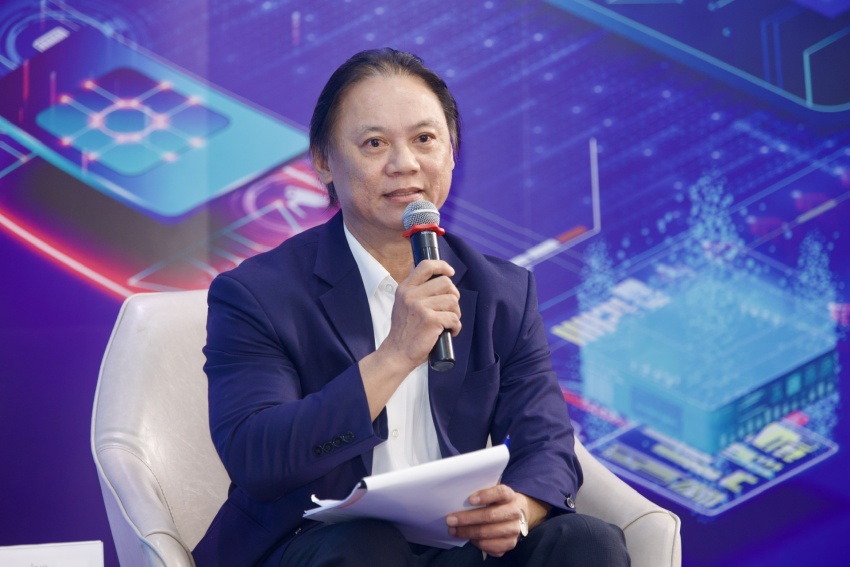
Overview of the panel discussion
Empowering digital economy growth in new era Empowering digital economy growth in new era

A conference on the digital economy is taking place this morning (November 25) featuring a policy dialogue between government agencies and the business community, offering a platform for stakeholders to share concerns and explore cooperation opportunities.

AI and 5G harnessed to revolutionise healthcare AI and 5G harnessed to revolutionise healthcare

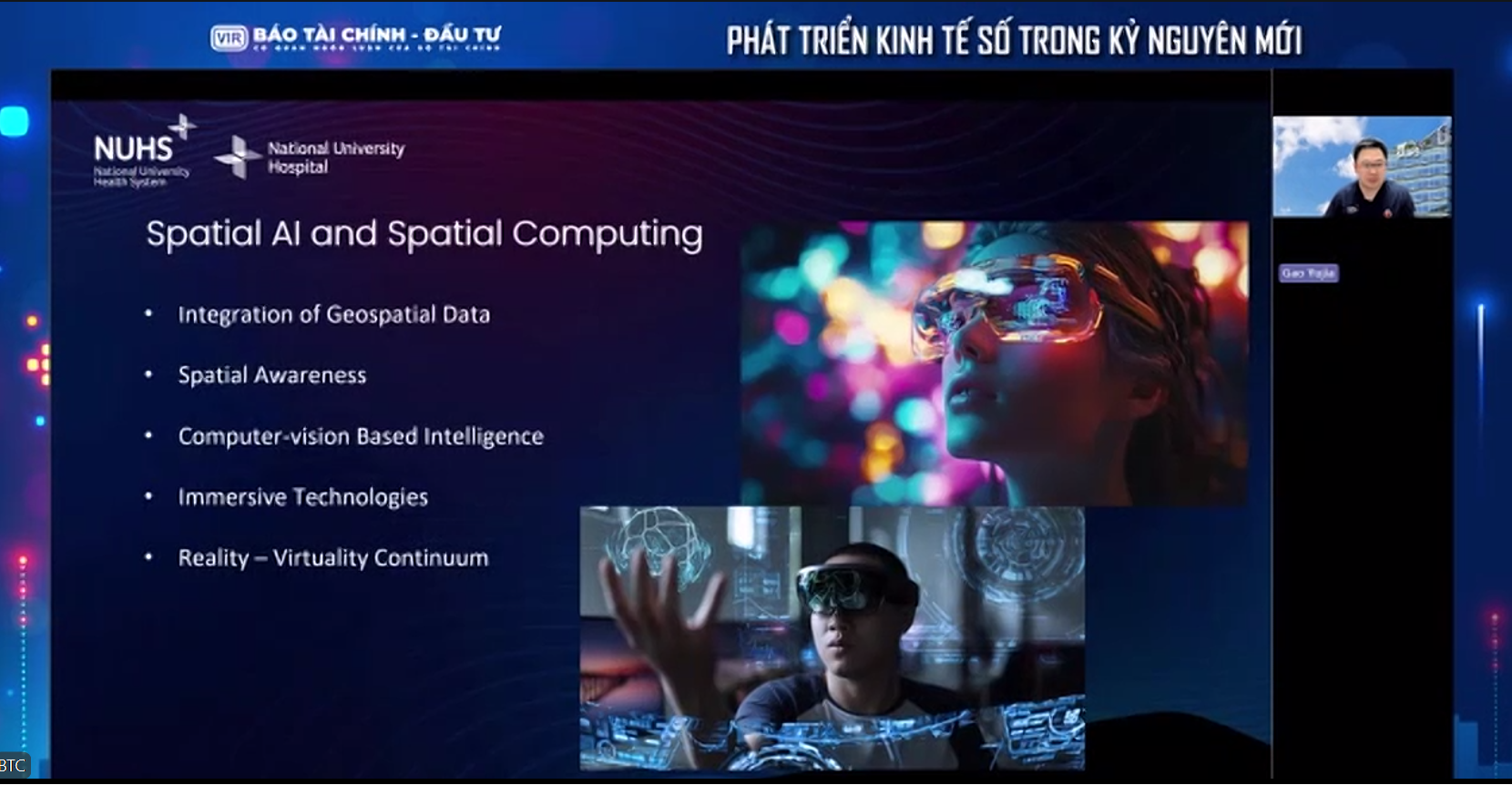
The convergence of AI and 5G is transforming healthcare, enabling innovations that enhance connectivity, efficiency, and patient-centred care, as heard at a VIR conference in Hanoi on November 25.

Vietnam has the talent to excel in digital age: Ericsson Vietnam has the talent to excel in digital age: Ericsson

Ericsson’s leader in Vietnam has explained how a strong 5G foundation will allow every business to operate with the speed and precision.